How to Build Your Own AI-Powered PMO with Claude: A Complete Guide
How to Build Your Own AI-Powered PMO with Claude: A Complete Guide
TLDR: Stateless chatbots forget everything between sessions, making them useless for real project management. Learn how to build a persistent AI-powered PMO using Claude's Projects feature, the Janitor Protocol, and advanced techniques like synthetic stakeholder simulations and multi-audience reporting.
Every project manager has experienced the frustration of opening a new AI chat and realizing the tool has no memory of your project, your team, or the three hours you spent teaching it your context yesterday. You start from scratch, re-explaining the same stakeholders, the same constraints, the same organizational politics. This is the fundamental problem with stateless chatbots, and it is the reason most PMs abandon AI tools after a few weeks.
But there is a better way. You can build a persistent, AI-powered Project Management Office that remembers everything, generates real deliverables, and grows smarter with every interaction.
Why Stateless Chatbots Fail Project Managers
Traditional AI chat interfaces treat every conversation as an isolated event. There is no continuity, no accumulated knowledge, and no understanding of your specific project landscape. For a project manager juggling multiple workstreams, dozens of stakeholders, and evolving requirements, this stateless approach is worse than useless because it creates the illusion of help without delivering lasting value.
The real power of AI for project management comes from persistence. When your AI tool understands your project charter, knows your team dynamics, remembers past decisions, and can reference historical data, it transforms from a glorified search engine into a genuine thinking partner. This is exactly what building a project memory system enables.
The Janitor Protocol: Keeping Your AI PMO Clean
Building a persistent PMO is only half the battle. Without maintenance, your AI knowledge base becomes cluttered with outdated information, contradictory instructions, and stale context. The Janitor Protocol is a systematic approach to keeping your AI PMO organized and effective.
Schedule a weekly review where you audit the documents and instructions loaded into your Claude Project. Remove completed project phases. Update stakeholder information when roles change. Refresh risk registers and budget figures. Think of it as the same hygiene you would apply to a physical filing cabinet, but for your AI workspace.
The protocol also includes versioning your system prompts. As your project evolves, the instructions you give Claude should evolve with it. Keep a changelog of prompt modifications so you can trace back decisions and understand why your AI behaves the way it does.
Generating Gantt Charts and Dashboards
One of the most powerful capabilities of an AI-powered PMO is producing visual deliverables that traditionally require expensive software licenses. Claude can generate Gantt charts in multiple formats, from simple Mermaid diagram syntax to structured data you can paste into free tools. You no longer need to justify a Microsoft Project license or wrestle with clunky Gantt chart software when your AI can produce professional timeline visualizations on demand.
Dashboards follow the same principle. Feed Claude your project metrics, and it can produce formatted dashboard layouts, status summaries, and health indicators. The key is structuring your input data consistently so that dashboard generation becomes a repeatable, one-prompt operation rather than a manual rebuild every reporting cycle.
Synthetic Stakeholder Simulations
Perhaps the most underused feature of an AI PMO is the ability to simulate stakeholder reactions before you enter the room. By loading stakeholder profiles into your Claude Project, including their communication preferences, historical objections, and political motivations, you create a sandbox for testing your presentations and proposals.
Before your next steering committee meeting, run your executive summary past a simulated version of your most critical stakeholder. Claude can role-play as a skeptical CFO, an impatient sponsor, or a technically demanding architect. This rehearsal process, covered in depth in the context of practicing difficult conversations, catches blind spots you would never find by reviewing slides alone.
The simulation becomes more accurate over time as you feed back real stakeholder reactions and refine the personas. After a few cycles, your AI PMO develops an uncanny ability to predict exactly where your proposals will face resistance.
The Multi-Audience Reporting Engine
Project managers spend enormous amounts of time rewriting the same information for different audiences. Your sponsor wants a one-page summary. Your team needs technical details. Your PMO wants standardized metrics. The compliance team requires risk-focused language.
An AI-powered PMO solves this by functioning as a multi-audience engine. Write your project update once in comprehensive form, then use targeted prompts to reformat it for each audience. Claude can strip technical jargon for executive audiences, expand acronyms for external stakeholders, and restructure data into whatever template your organization requires.
This is not just about saving time. It is about consistency. When every audience receives their preferred format from the same source data, you eliminate the contradictions and omissions that plague manual rewriting.
Getting Started Today
You do not need to build the entire AI PMO in one session. Start by creating a single Claude Project for your most active initiative. Load your project charter, stakeholder list, and current status report. Write a system prompt that defines Claude's role as your project analyst. Then begin interacting naturally, asking questions, generating documents, and refining the system as you go.
Within a week, you will have a persistent AI partner that understands your project better than most of your human stakeholders. Within a month, you will wonder how you ever managed without it.
Frequently Asked Questions
How much time does it take to set up an AI-powered PMO?
Initial setup takes approximately two to three hours for your first project. This includes uploading key documents, writing a system prompt, and running a few test interactions. Each additional project takes less time because you can reuse templates and adapt existing prompts. The investment pays for itself within the first week through faster document generation and reduced context-switching.
Can Claude handle multiple projects simultaneously in one PMO?
Yes, but the most effective approach is creating separate Claude Projects for each major initiative. This prevents context contamination where details from one project bleed into another. You can maintain a master PMO project that holds cross-project information like resource allocation, portfolio-level risks, and organizational standards, while individual project spaces handle day-to-day work.
Is my project data safe when using Claude for PMO purposes?
Anthropic does not train on data submitted through Claude Pro or Team plans. However, you should always follow your organization's data governance policies. Avoid uploading classified or highly regulated data without approval. Many PMs use anonymized or generalized versions of sensitive documents, which still provide Claude with enough context to be useful without exposing confidential specifics.
Visit Subthesis for more project management resources and courses.
Want the Complete System?
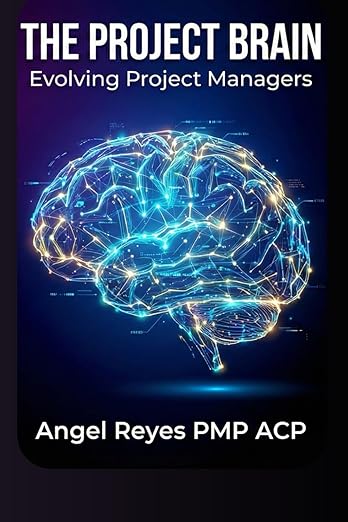
This article is just a taste. The Project Brain gives you the full blueprint — persistent context, automated reporting, and a local AI-powered PMO.
Get The Project Brain