Decision Making Frameworks: Proven Strategies for Better Business Choices
Decision Making Frameworks: Proven Strategies for Better Business Choices
TLDR: Structured decision-making frameworks like the 10-10-10 Rule, Inversion Framework, and second-order thinking help project managers cut through analysis paralysis and make consistently better choices under pressure.
Every project manager makes dozens of decisions each day. Some are trivial, others carry significant consequences for budget, timeline, and team morale. Yet most of us rely on gut instinct far more than we should. The problem is not that intuition is bad—it is that our brains are wired with cognitive shortcuts that served us well on the savannah but routinely fail us in complex business environments. The good news is that a handful of practical frameworks can dramatically improve the quality of your decisions without slowing you down.
How Your Brain Makes Decisions (And Why It Gets Them Wrong)
Your brain processes information through two systems. System 1 is fast, automatic, and emotional. System 2 is slow, deliberate, and logical. When you are under pressure—tight deadlines, competing stakeholder demands, back-to-back meetings—System 1 takes over. That means you default to anchoring bias, confirmation bias, and the sunk cost fallacy without even realizing it. Understanding this is the first step to making better choices. You do not need to eliminate bias; you need frameworks that force System 2 to engage at the moments that matter most. Recognizing which decisions deserve deliberate thought is itself a skill worth building, and it starts with classifying every decision by its reversibility.
Reversible vs. Irreversible Decisions
Jeff Bezos popularized the distinction between Type 1 and Type 2 decisions. Type 1 decisions are irreversible—once you walk through the door, you cannot come back. Type 2 decisions are reversible and should be made quickly. The mistake most project managers make is treating every decision as Type 1. They schedule meetings, build consensus, and draft slide decks for choices that could be undone tomorrow with minimal cost. Practice labeling each decision as you encounter it. If it is reversible, decide fast and move on. Reserve your analytical energy for the truly irreversible calls, like committing to a technology platform, signing a vendor contract, or restructuring a team. This single distinction will reclaim hours every week that you currently spend overthinking. For a deeper look at how proper risk analysis supports these high-stakes calls, explore the systematic approaches available to you.
The 10-10-10 Rule
Suzy Welch's 10-10-10 Rule is deceptively simple: before making a decision, ask yourself how you will feel about it 10 minutes from now, 10 months from now, and 10 years from now. This framework is powerful because it disrupts temporal myopia—the tendency to overweight immediate discomfort and underweight long-term consequences. When a stakeholder pressures you to skip testing to hit a deadline, the 10-minute answer is relief. The 10-month answer might be a production outage that erodes trust. The 10-year answer is a pattern where quality always loses. By stretching your time horizon, the right choice often becomes obvious. Use this framework especially when emotions are high or when you are being pressured into a quick commitment.
The Inversion Framework
Instead of asking "How do I make this project succeed?" ask "What would guarantee this project fails?" Charlie Munger championed inversion as a thinking tool, and it is extraordinarily useful for project managers. List every action that would destroy your project: ignoring stakeholder concerns, skipping risk reviews, allowing scope to grow unchecked, failing to communicate status. Now ensure your plan actively prevents each one. Inversion exposes blind spots that forward-looking planning misses. It is particularly effective during project kickoffs and phase gate reviews. When you are managing competing priorities across multiple stakeholders, inversion helps you see which compromises are dangerous and which are acceptable.
Second-Order Thinking and Downstream Consequences
First-order thinking asks "What happens next?" Second-order thinking asks "And then what?" Most poor decisions are not wrong at the first level—they fail at the second or third. Approving overtime to meet a deadline solves the immediate problem but may cause burnout, increase defect rates, and train stakeholders to expect heroics. Second-order thinkers trace the causal chain forward. Before any significant decision, write down the immediate effect, the likely second-order effect, and the possible third-order effect. You will not always be right, but you will catch consequences that first-order thinkers routinely miss. This habit pairs well with strategic thinking practices that elevate you from reactive task manager to proactive leader.
Escaping the Sunk Cost Trap
The sunk cost fallacy is the tendency to continue investing in something because of what you have already spent, rather than what you expect to gain. Projects are especially vulnerable because budgets, timelines, and reputations have been committed publicly. Recognizing sunk costs requires asking one question: "If I were starting fresh today, with no prior investment, would I choose this path?" If the answer is no, the rational move is to stop—regardless of what has been spent. Pair this with a pre-mortem exercise at key milestones. Imagine the project has failed, then work backward to identify why. This makes it psychologically easier to cut losses early.
Putting Frameworks Into Practice
Frameworks only work if you use them consistently. Start by choosing one—the reversible vs. irreversible classification is the easiest entry point—and apply it for two weeks. Once it becomes automatic, layer in a second framework. Keep a brief decision journal: record the decision, which framework you applied, your reasoning, and the outcome. Review it monthly. Over time, you will spot patterns in where your judgment is strong and where it needs support. The goal is not perfection; it is a measurable improvement in decision quality across hundreds of choices per month.
Frequently Asked Questions
How do I know which framework to use for a specific decision?
Start by classifying the decision as reversible or irreversible. For irreversible decisions with emotional pressure, use the 10-10-10 Rule. For planning and risk prevention, use Inversion. For decisions with complex downstream effects, apply second-order thinking. Over time, you will develop an instinct for which tool fits the situation.
Can I combine multiple frameworks for a single decision?
Absolutely. For high-stakes irreversible decisions, running through two or three frameworks provides different angles on the same problem. Use inversion to identify failure modes, the 10-10-10 Rule to check your emotional state, and second-order thinking to trace consequences. The overlap in conclusions builds confidence in your choice.
How do I get my team to adopt structured decision-making?
Start by modeling the behavior yourself. When you present a recommendation, briefly share the framework you used. In meetings, ask questions like "Is this reversible?" or "What is the second-order effect?" Make frameworks visible by adding a decision classification step to your project templates. Teams adopt what they see working, so demonstrate results before mandating process.
Visit Subthesis for more project management resources and courses.
Want the Complete System?
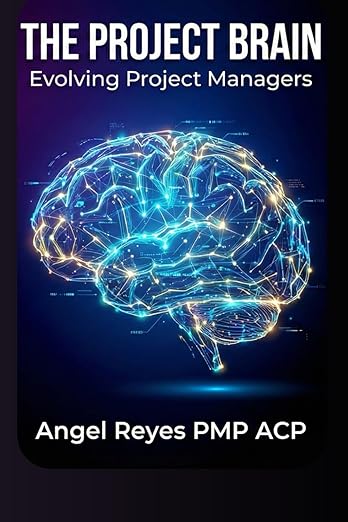
This article is just a taste. The Project Brain gives you the full blueprint — persistent context, automated reporting, and a local AI-powered PMO.
Get The Project Brain